
Next.js ecommerce & shop templates built on the App Router
Every ASoc shop template ships as a Next.js project — App Router, TypeScript and Tailwind CSS — with the storefront already built: catalog browsing, product detail pages, a working cart and wishlist, and a checkout flow.
The split follows what actually needs a browser. Catalog and product pages are Server Components and arrive as HTML; the cart, wishlist and filters are the client-side parts, so you are not shipping an entire storefront as JavaScript to render a product grid.
Product routes use generateStaticParams, so a catalog becomes static routes at build time. A storefront with a hundred products ships as a hundred prerendered pages, each as fast and as crawlable as the home page.
Why start from the Next.js edition
App Router, not a Pages Router port
Built on the App Router's own conventions — co-located layouts, generateStaticParams for product routes, the file-based metadata API — rather than a pages/ project with an app/ folder bolted on.
Server-rendered catalog, client-side cart
Listings and product detail render on the server. Cart, wishlist and filters run in the browser because that is the part that genuinely needs to. The product grid around them does not.
Prerendered product pages
generateStaticParams turns the catalog into static routes at build time, so a deep product page loads like a landing page and is crawlable without a rendering budget.
Typed metadata per product
Every product route exports a typed metadata object, so titles, canonicals and Open Graph images are generated per product and type-checked at build time.
Real storefront pages, not mockups
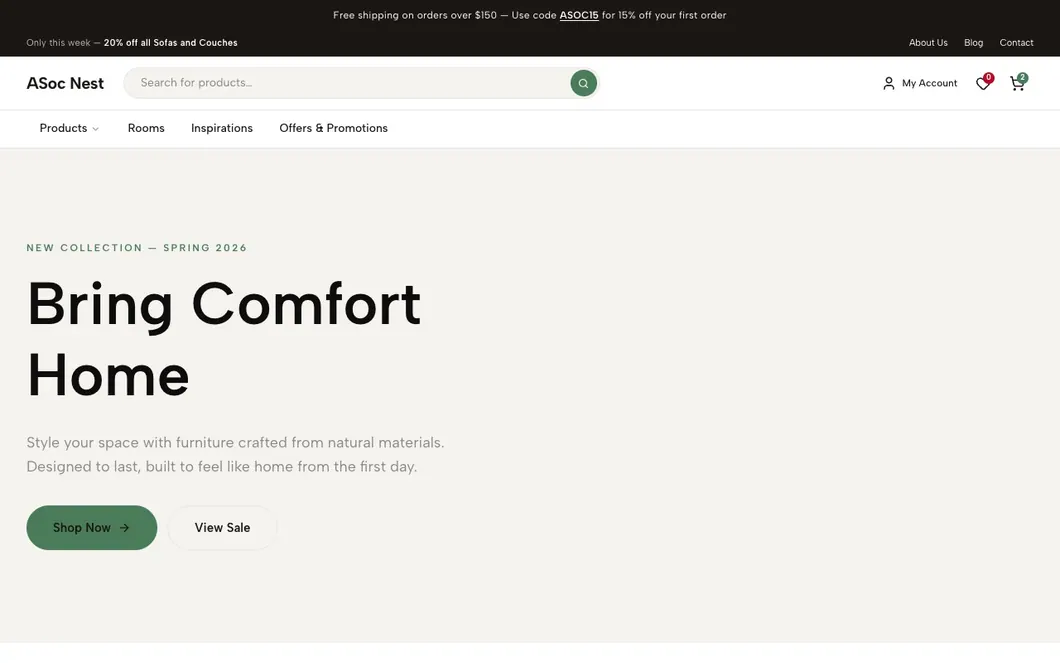
Catalog, product detail, cart, wishlist and checkout are wired up with working state — not static screenshots — so the shopping flow behaves like a real store from the first click.
Next.js shop templates in ASoc

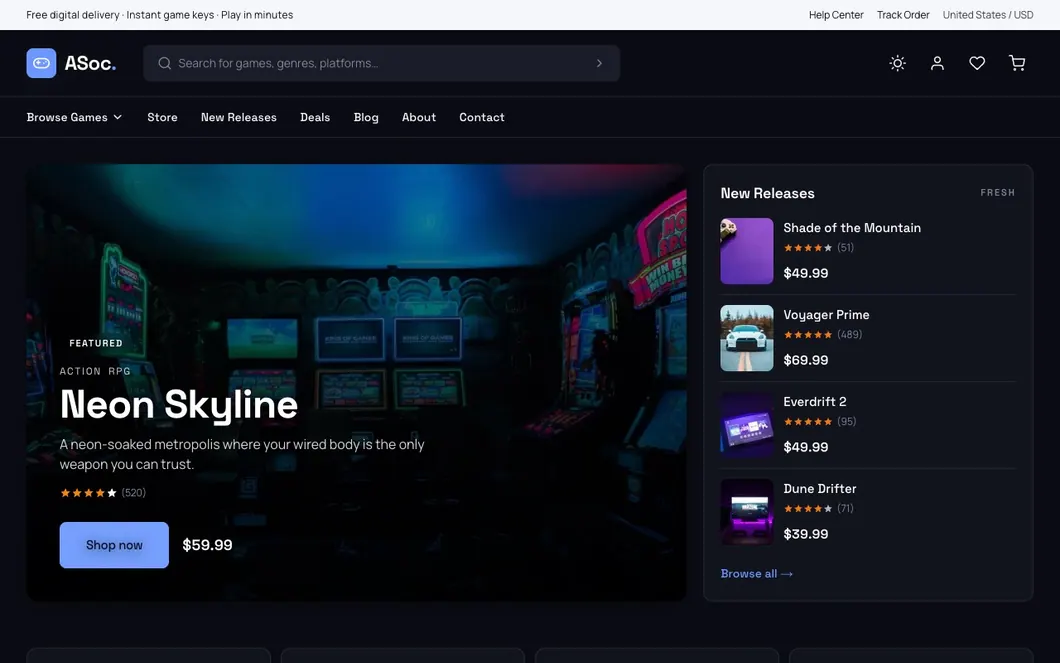
A digital game store — instant-key catalog, cart, and deals across every platform.
Next.js




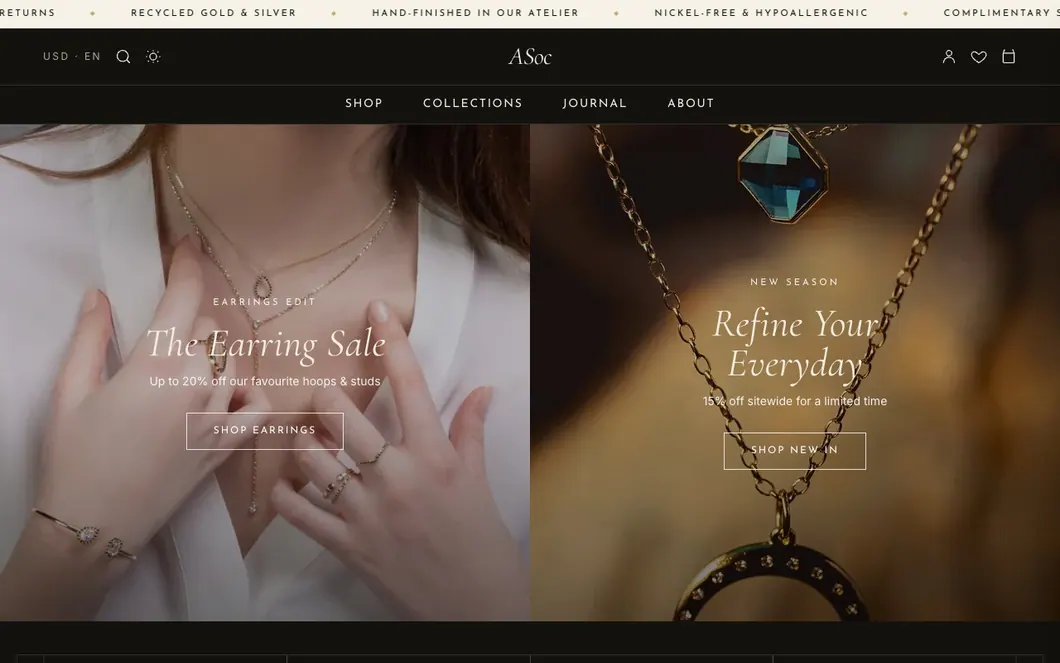
A fine-jewellery storefront — everyday earrings, necklaces, rings and a working bag.
Next.js


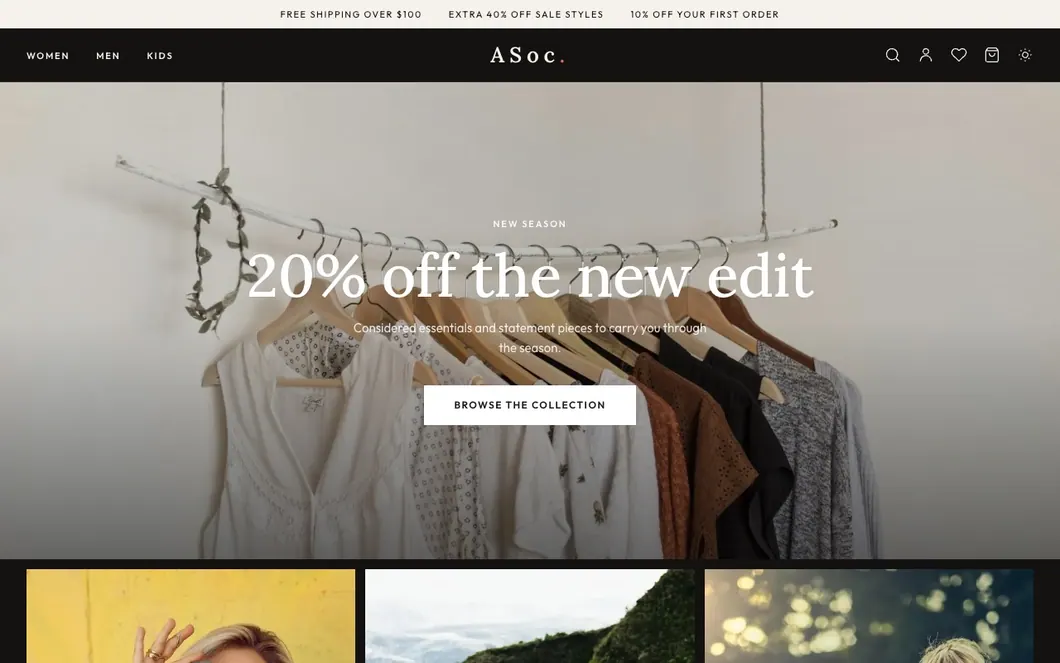
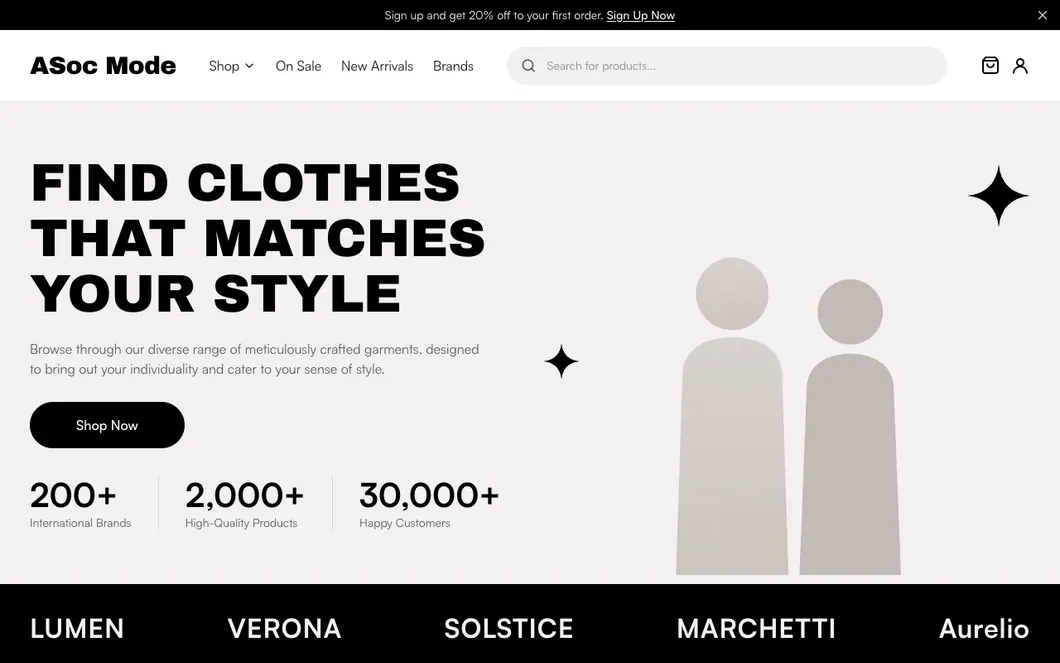
A color-forward fashion storefront — women's, men's & kids' with cart and wishlist.
Next.js
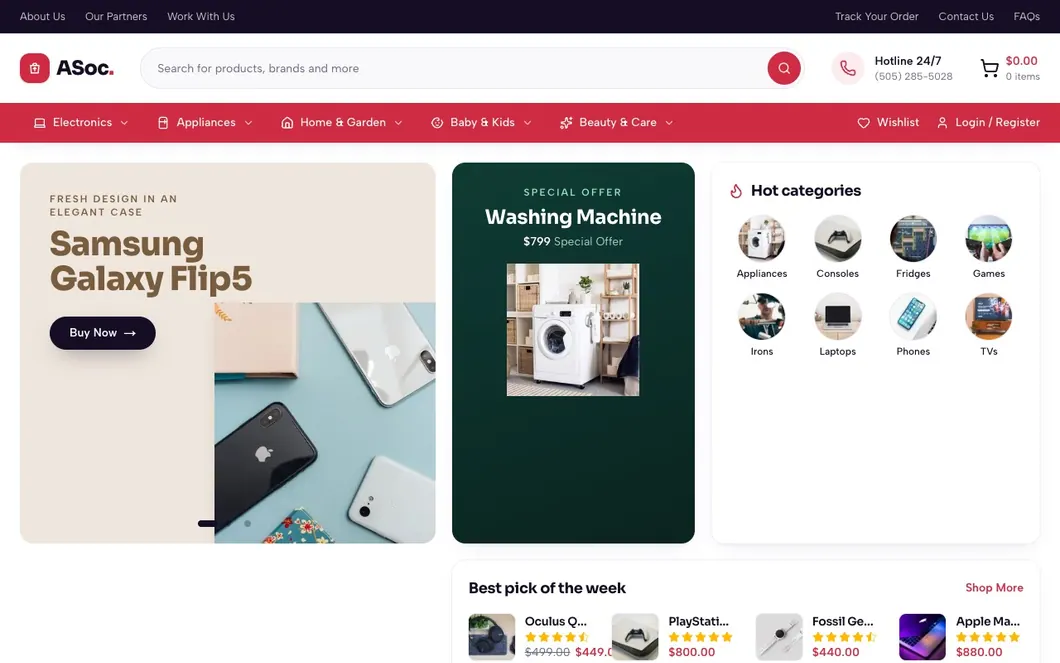
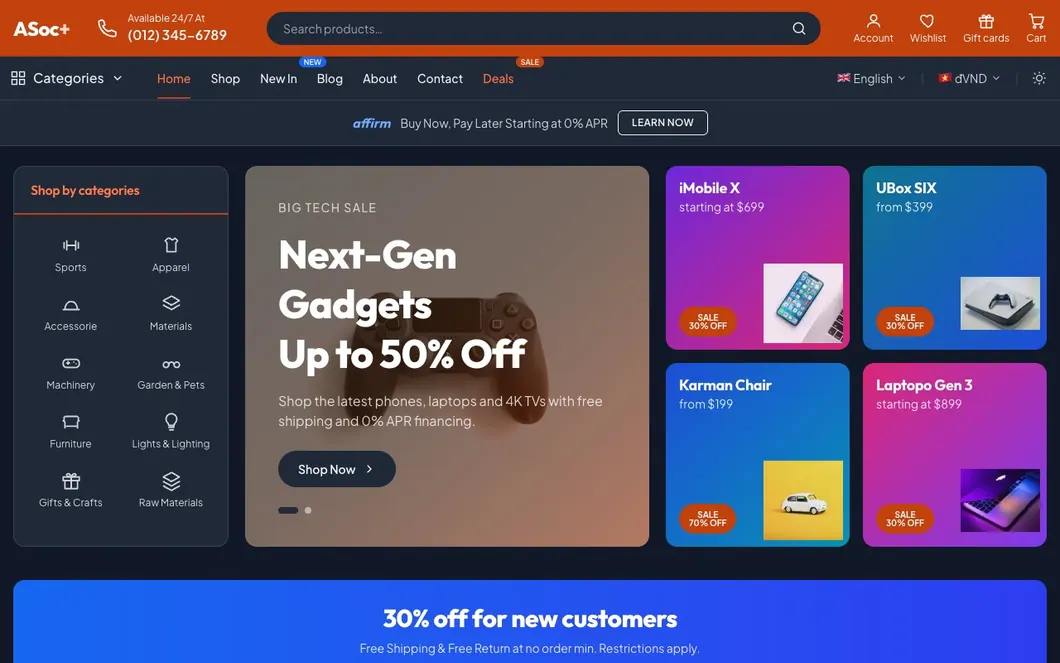
A multi-department electronics & appliances marketplace — mega-menu, cart and deals.
Next.js

An organic baby-clothes storefront — sleepsuits, knits, bundles and a working cart.
Next.js
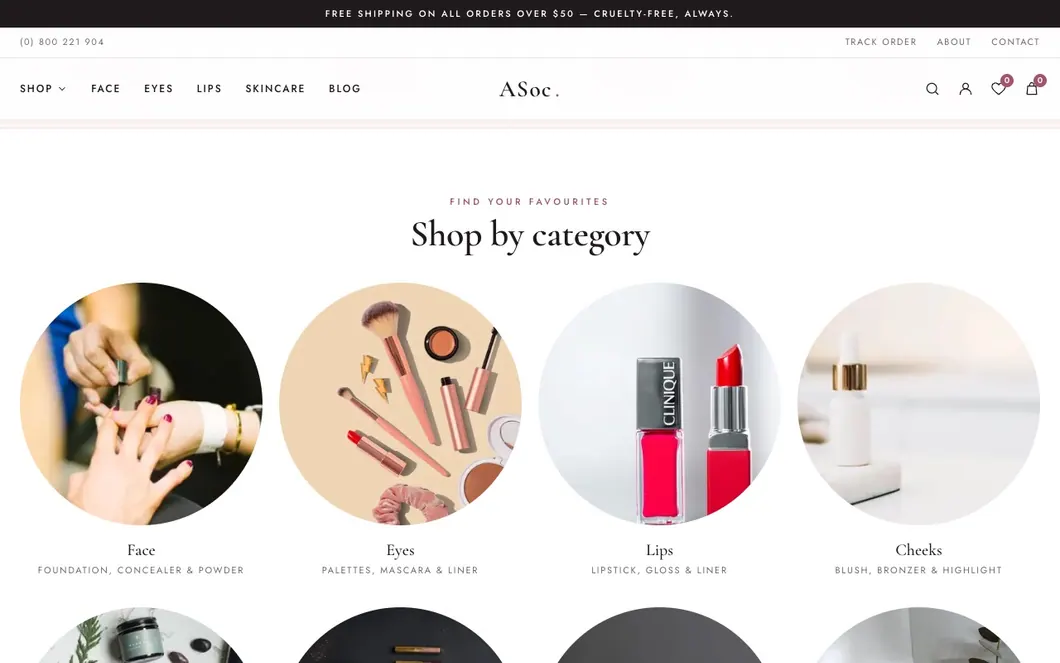

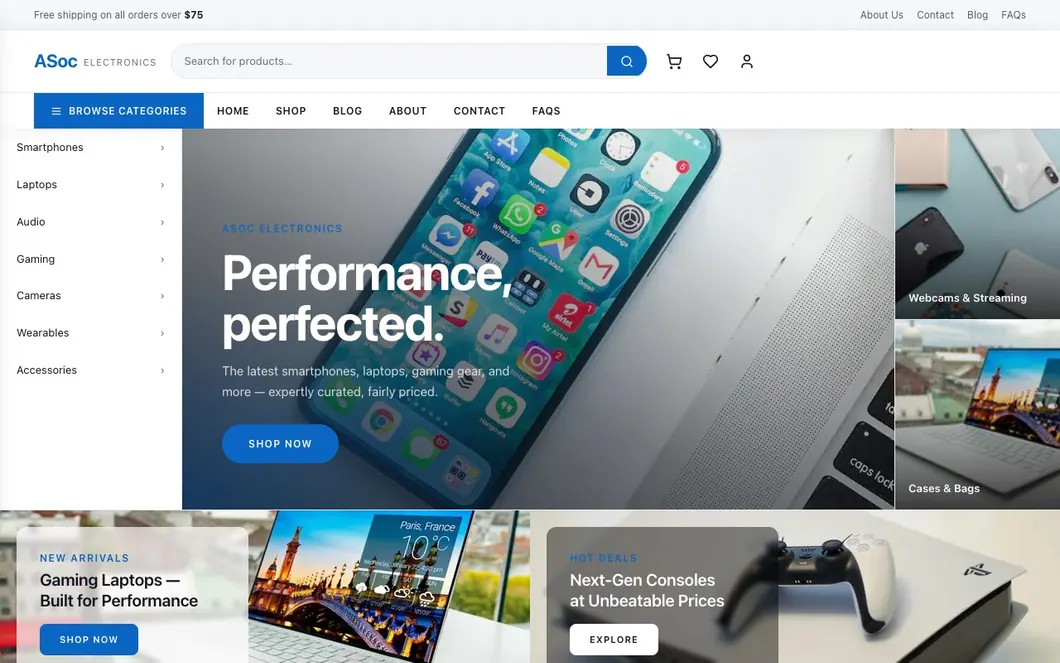




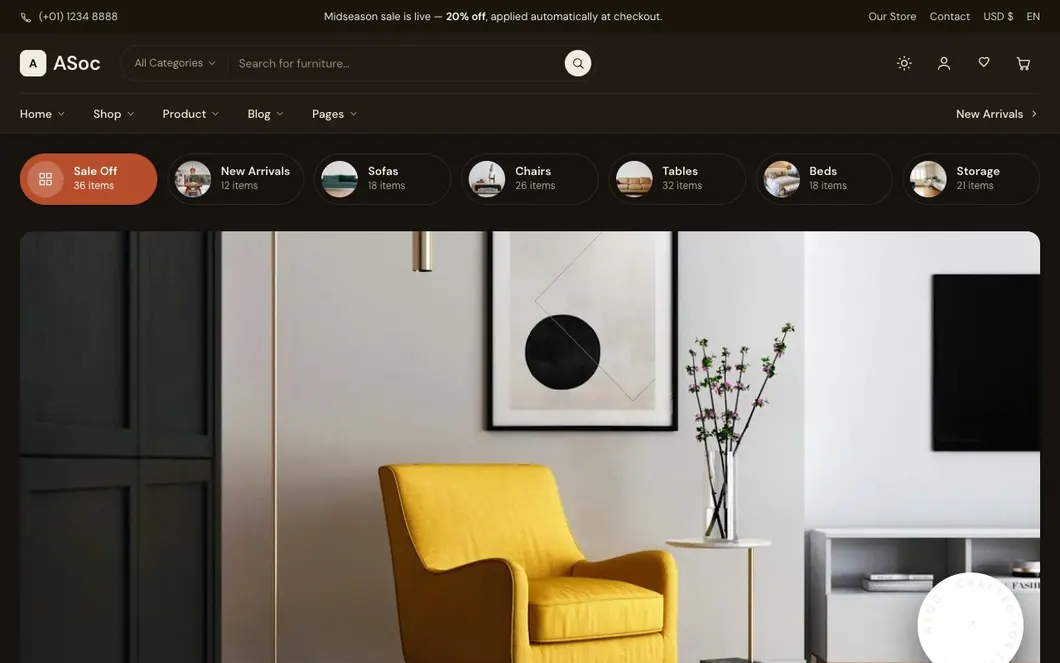

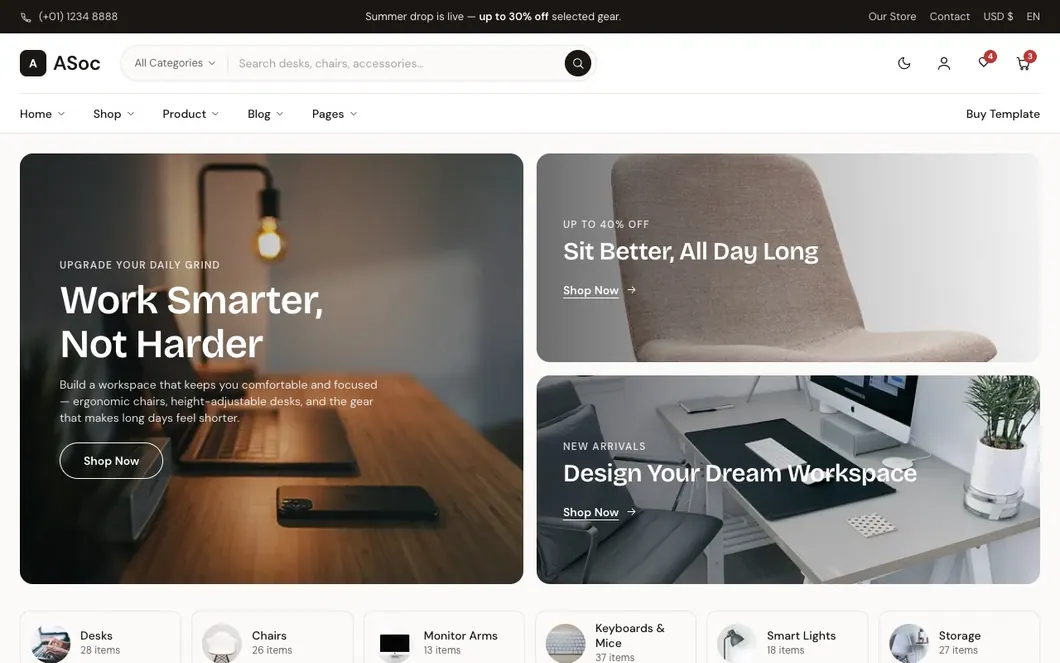

A sneaker storefront — running, training, and lifestyle footwear built for motion.
Next.js
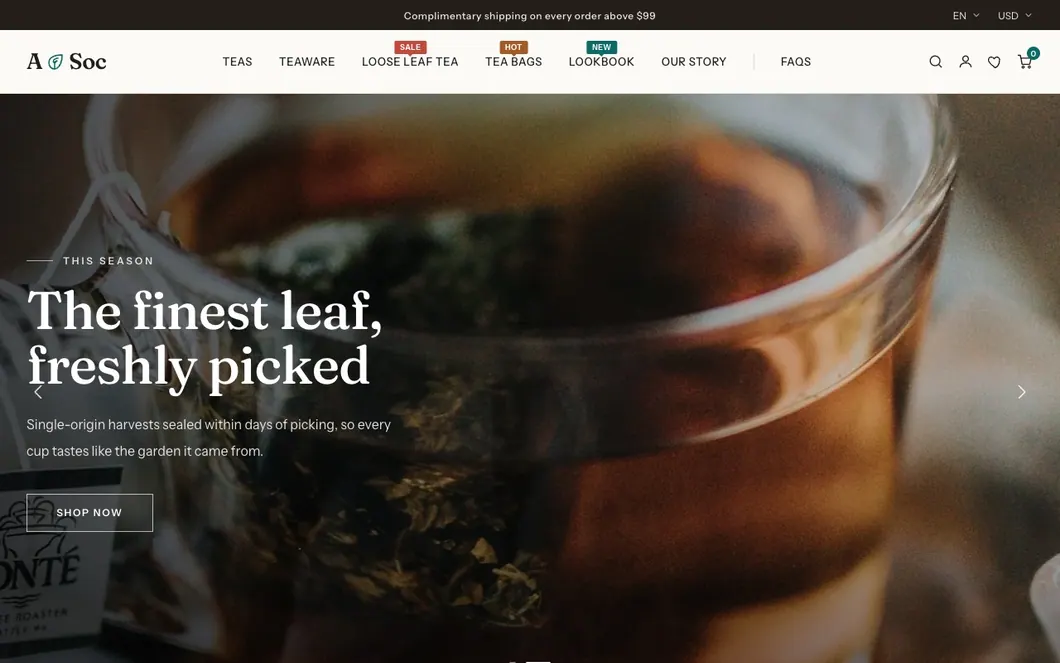
A single-origin tea & teaware storefront — loose leaf, tea bags, and hand-thrown ware.
Next.js

A vinyl record shop — new releases, limited pressings, hi-fi gear, and accessories.
Next.js
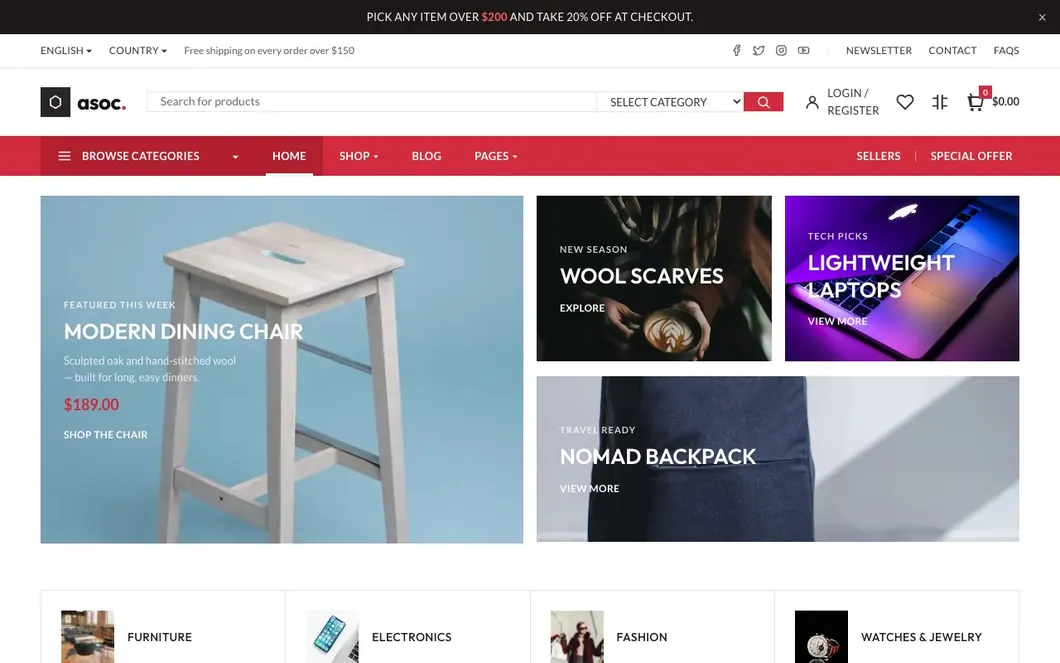
A curated multi-vendor marketplace — furniture, electronics, watches, and more in one cart.
Next.js
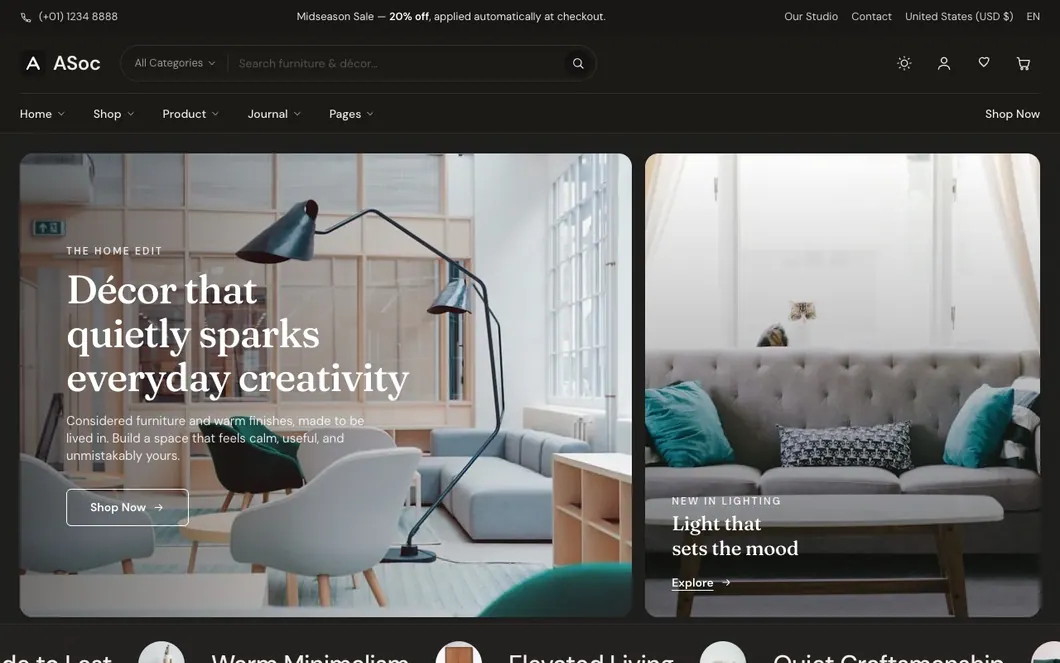

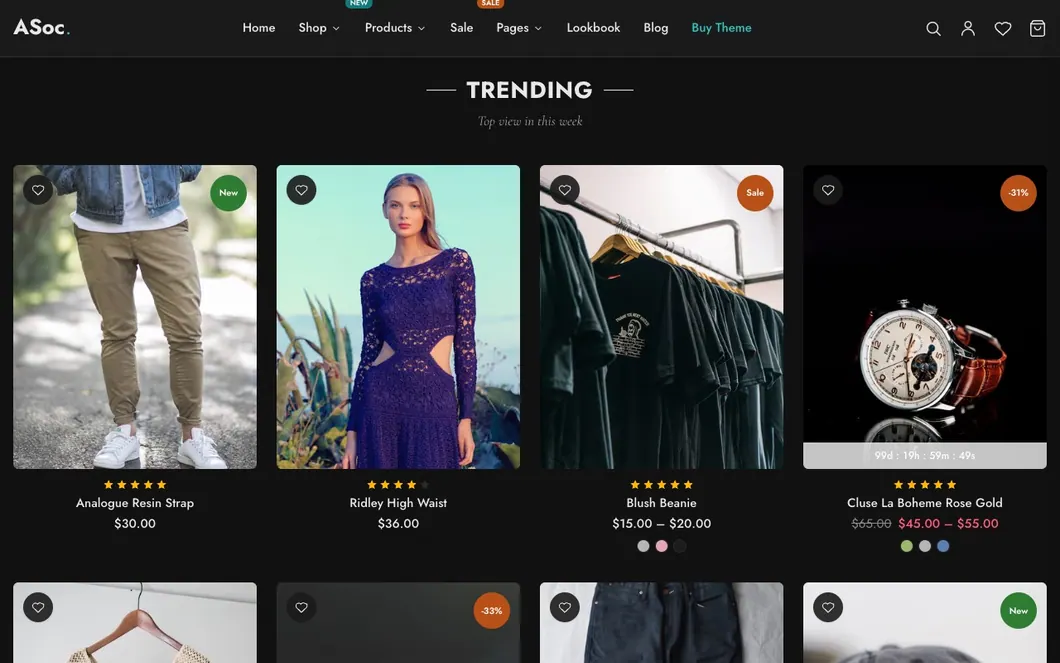
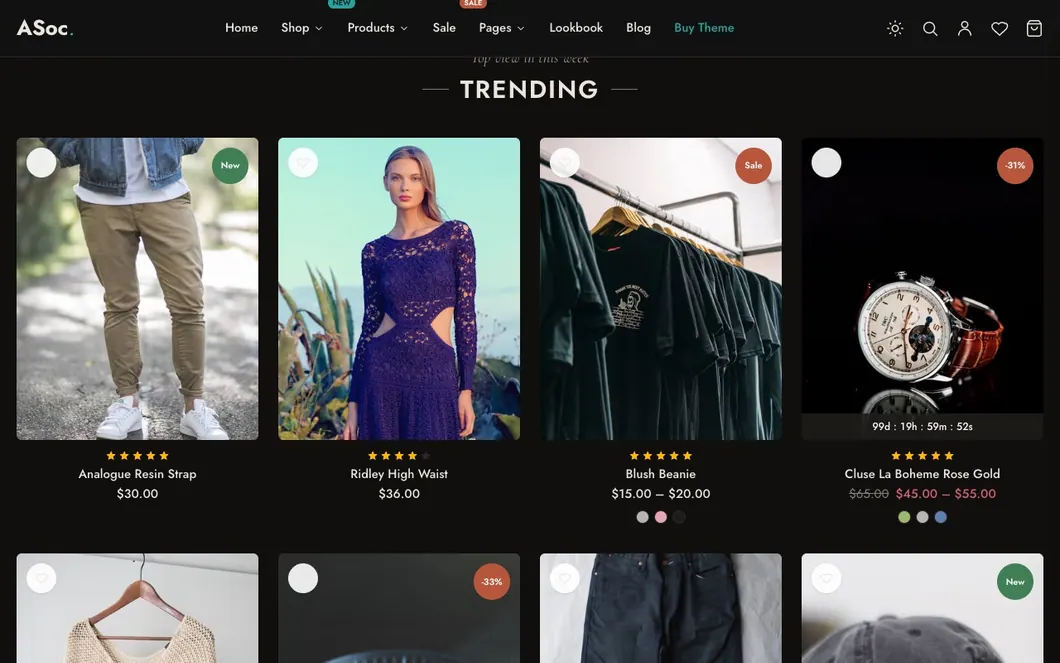
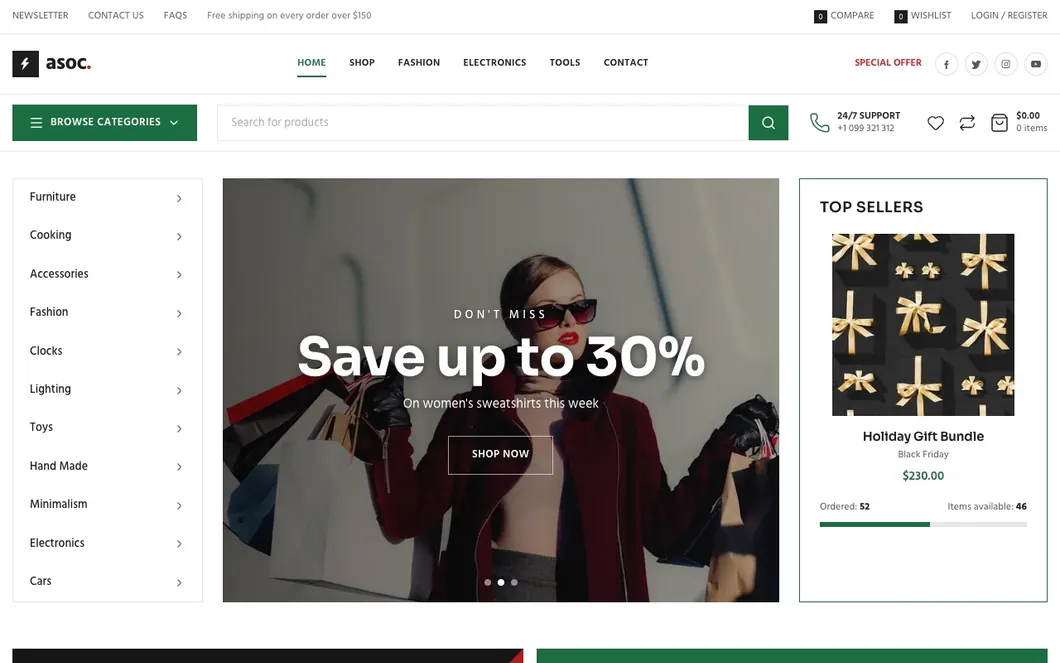
A Black Friday sale storefront — multi-department deals, countdowns, and promo codes.
Next.js
Frequently asked questions
Are product pages static or server-rendered?
Static — generateStaticParams prerenders every product route at build time, so product pages are served as HTML rather than assembled per request.
How does the cart work?
Cart and wishlist are wired up with working client-side state, so the flow behaves like a real store out of the box. Connecting them to your own backend or payment provider is yours to choose — the templates ship the storefront, not a checkout integration.
How much of the storefront is client-side JavaScript?
The interactive parts — cart, wishlist, filters, mega-menus. Catalog and product pages are Server Components and ship as HTML.
Which version of Next.js does a storefront use?
Each storefront's package.json pins the version it ships with. The code follows the current App Router conventions — server components, generateStaticParams, the metadata API — not a legacy Pages Router layout.
Is there a React, Vue or Angular edition?
Not for the storefronts yet — every ASoc shop template ships a Next.js edition today. The admin templates already have React, Vue and Angular editions, and more shop editions follow as they ship.