
Tailwind CSS ecommerce & shop templates
ASoc's shop templates are built entirely with Tailwind CSS utility classes and a shared design-token system — real catalog, product detail, cart, wishlist and checkout pages across dozens of storefront niches, with no compiled CSS framework to override.
Because every storefront shares the same tokens, restyling one to match your brand means editing colors, fonts and spacing in one place — not fighting specificity across dozens of components.
Storefront styling is CSS-first. Tailwind v4 keeps the palette, type scale and spacing in a @theme block inside the stylesheet, so recolouring a shop — product cards, price badges, sale tags, the cart drawer — is a handful of custom properties rather than a JavaScript config kept in sync by hand.
Why a Tailwind-native shop template
Utility-first, zero CSS fights
Every shop template is built purely with Tailwind CSS utility classes — restyle by editing classes, never by overriding a compiled framework or wrestling specificity.
Recolour a storefront from one block
Tailwind v4 keeps design tokens in the stylesheet. A shop's entire palette — cards, badges, sale tags, buttons — resolves from custom properties in a single @theme block, with no tailwind.config.js to keep in step.
One design system, every niche
The same tokens drive every storefront niche, so switching from a fashion template to an electronics template doesn't mean relearning a styling approach.
Dark mode across the whole shop
A dark class on the root element flips the token values, and every storefront section — product grid, filters, cart drawer — carries its own dark: variants. No second stylesheet, no duplicated component.
No framework CSS to fight
There is no Bootstrap or component-library stylesheet under a storefront. A product card looks the way its classes say it does, so you never reach for !important to win a specificity argument.
Tailwind CSS shop templates in ASoc

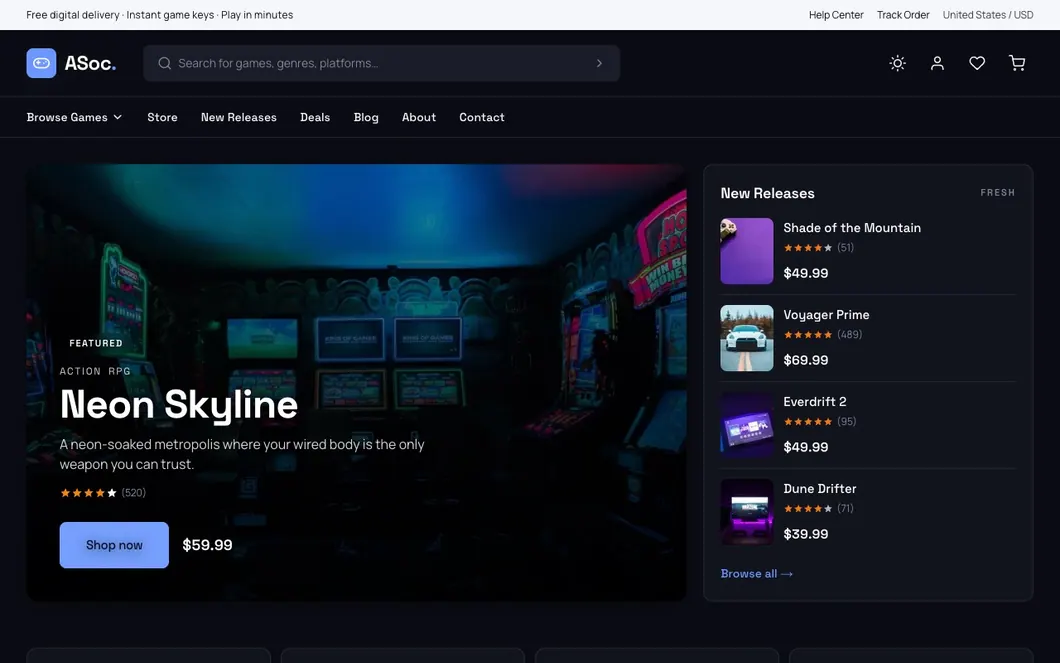
A digital game store — instant-key catalog, cart, and deals across every platform.
Next.js







A fine-jewellery storefront — everyday earrings, necklaces, rings and a working bag.
Next.js


A color-forward fashion storefront — women's, men's & kids' with cart and wishlist.
Next.js
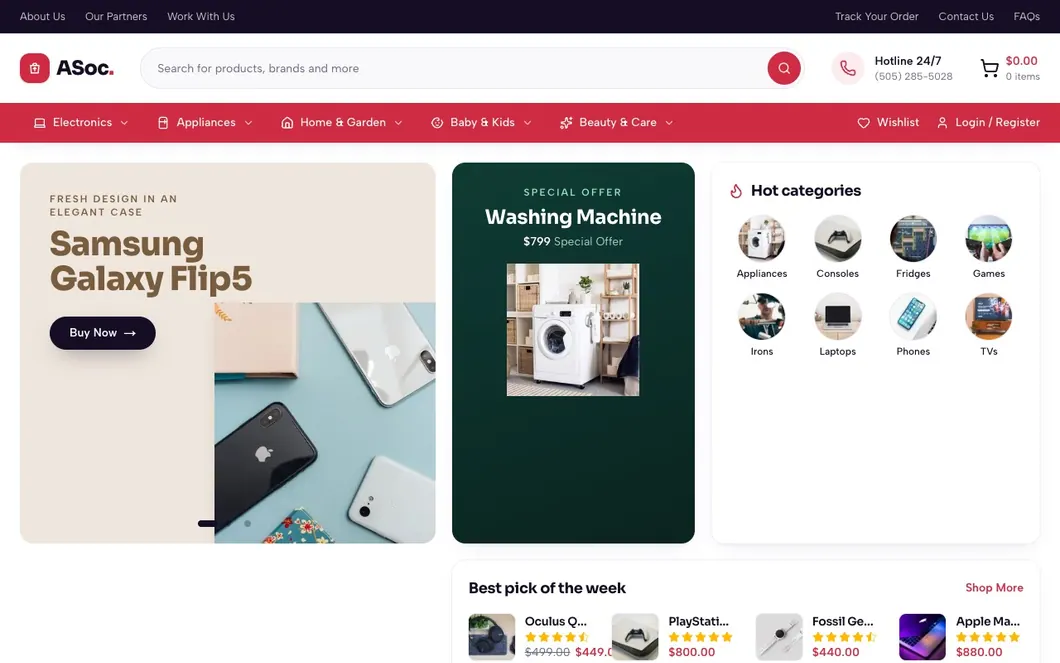
A multi-department electronics & appliances marketplace — mega-menu, cart and deals.
Next.js

An organic baby-clothes storefront — sleepsuits, knits, bundles and a working cart.
Next.js











A sneaker storefront — running, training, and lifestyle footwear built for motion.
Next.js

A single-origin tea & teaware storefront — loose leaf, tea bags, and hand-thrown ware.
Next.js

A vinyl record shop — new releases, limited pressings, hi-fi gear, and accessories.
Next.js

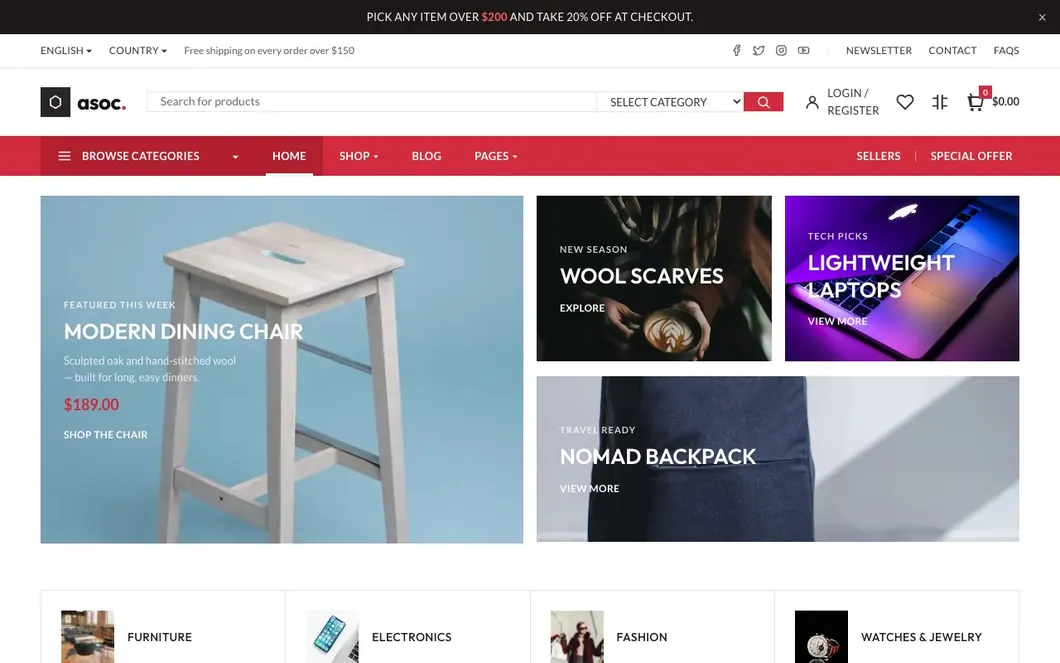
A curated multi-vendor marketplace — furniture, electronics, watches, and more in one cart.
Next.js


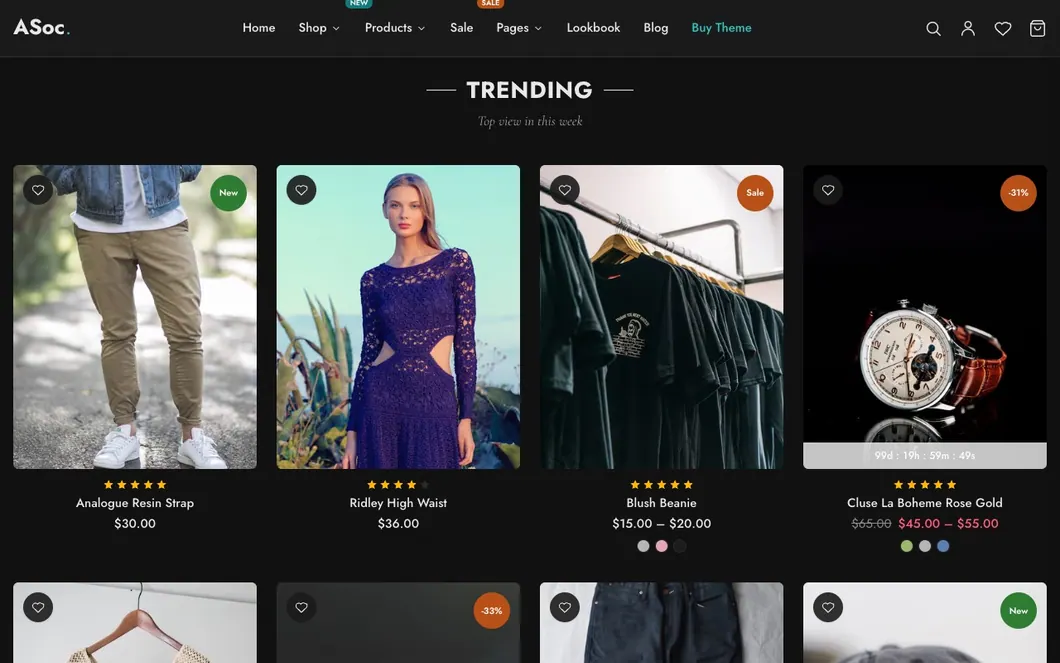
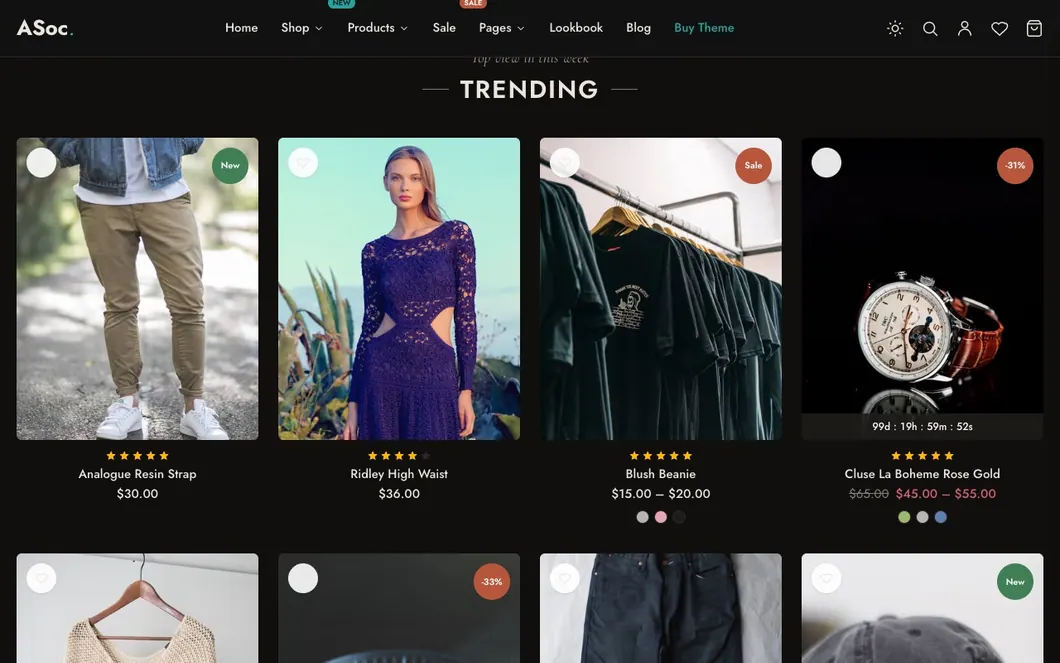

A Black Friday sale storefront — multi-department deals, countdowns, and promo codes.
Next.js
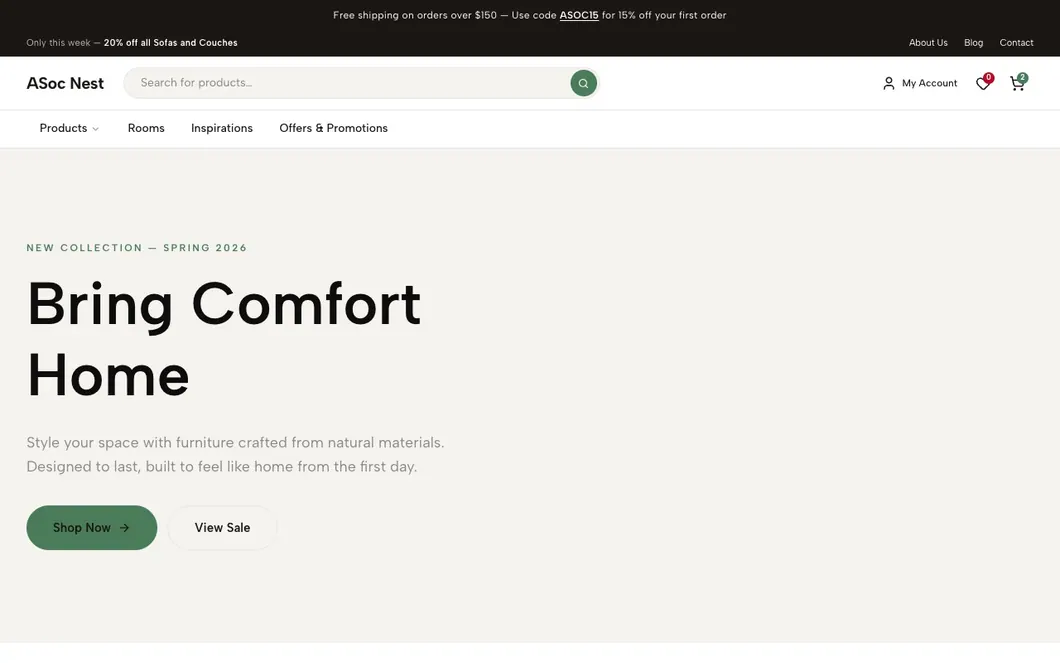
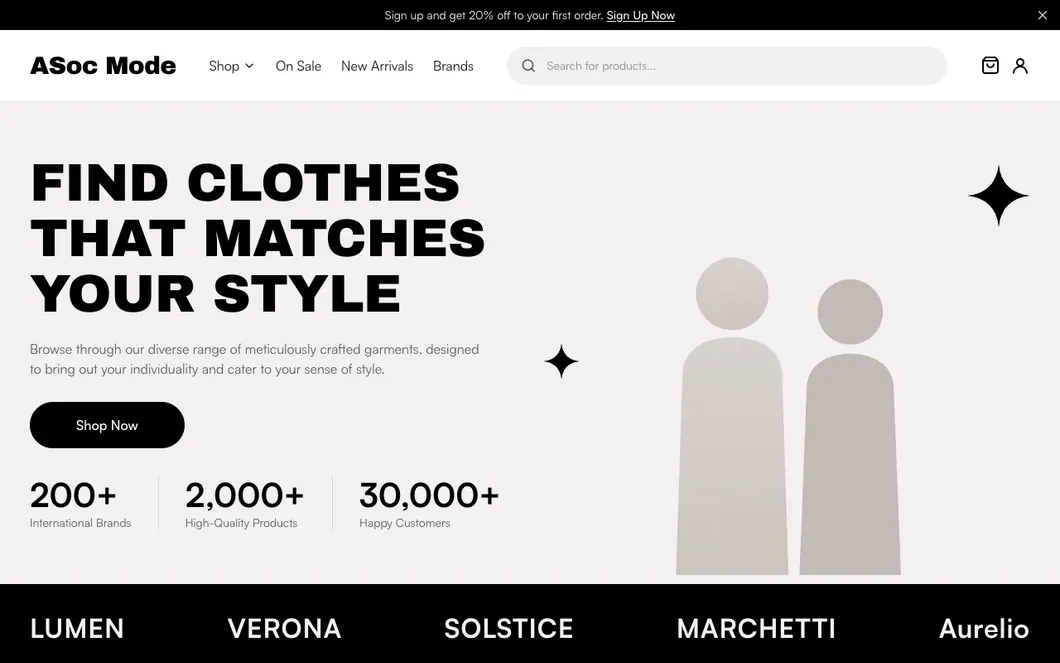
Frequently asked questions
Are all ASoc shop templates built with Tailwind CSS?
Yes — every storefront is built entirely with Tailwind CSS utility classes and a shared set of design tokens.
Which version of Tailwind do the storefronts use?
Tailwind CSS v4. Configuration is CSS-first, so a storefront's tokens are declared in a @theme block in its stylesheet instead of a tailwind.config.js file.
Can I restyle a storefront for my brand?
Yes — colors, fonts, radius and spacing are design tokens you edit in one place, and every product card, badge and button follows them.
Do the storefronts support dark mode?
Yes, class-based. A dark class on the root element switches token values, and product grids, filters and the cart carry their own dark: variants.
Do the templates include a working cart?
Yes — catalog, product detail, cart and wishlist are wired up with working state in every ASoc shop template.